SEO Title
When selecting a uPVC window or door system, most people initially compare the finished window, glass and hardware. However, the profile system is one of the fundamental components that determines how the finished window is fabricated, reinforced, glazed and assembled.
This is why understanding uPVC profiles is important before comparing quotations or selecting a window system. Two windows can have similar glass and hardware specifications while differing significantly in profile configuration, reinforcement provision, fabrication requirements and overall system design.
For fabricators, the profile is even more important because it directly affects workshop operations such as cutting, welding, reinforcement insertion, drainage preparation, glazing and hardware installation.
This guide explains what uPVC profiles are, the main profile types, how they are constructed, why reinforcement matters, how fabrication works and what should be checked before selecting a profile system.
What Are uPVC Profiles?
uPVC stands for unplasticised polyvinyl chloride. Unlike flexible PVC products, uPVC is a rigid material used for applications where dimensional stability, weather resistance and structural functionality are required.
uPVC window and door profiles are manufactured through an extrusion process. The material compound is processed through a die to produce a continuous profile with a specific cross-sectional geometry.
The resulting profile is then cut to the required length and used as part of a window or door system.
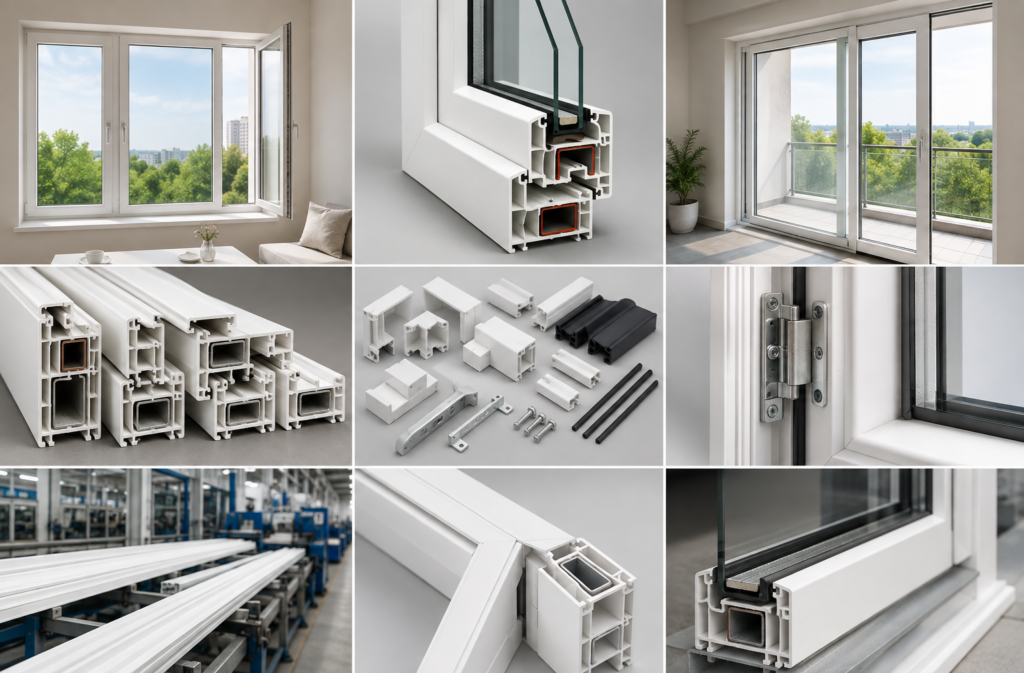
A typical uPVC system may include:
- Frame profiles
- Sash profiles
- Mullion and transom profiles
- Sliding sash profiles
- Interlock profiles
- Glazing beads
- Couplers and adaptors
- Mesh-related profiles
- Auxiliary profiles
Each component has a specific role within the finished system.
Government specifications for uPVC windows and doors similarly identify components such as multi-chambered frames, sashes, mullions, galvanized reinforcement, glazing beads, EPDM gaskets and hardware.
Why Does the Profile Matter in a uPVC Window?
The profile is not simply the outer frame visible around the glass.
Its internal construction determines how the window can be fabricated and how different components work together.
A profile can influence:
Structural Support
The profile geometry and reinforcement provision contribute to the structural requirements of the window or door.
Thermal Performance
Multi-chamber construction creates internal sections within the profile. These chambers can contribute to thermal insulation by reducing direct material paths through the profile.
Fabrication
The profile must be suitable for the required cutting, welding, reinforcement, drainage and assembly processes.
Glazing
The profile system needs to accommodate the specified glass and glazing bead configuration.
Hardware Integration
Handles, locks, hinges, rollers and other hardware need to work with the selected profile geometry.
Installation
The frame configuration must work with the wall opening, fixing method, drainage and sealing requirements.
This is why a window should be evaluated as a complete system, rather than by looking only at the visible frame.
Main Types of uPVC Window Profiles
Different window and door designs require different profile configurations. The most common categories include casement, sliding and auxiliary profiles.
1. uPVC Casement Profiles
Casement windows typically open using side-hinged or similar opening mechanisms.
A casement system commonly uses frame and sash profiles, along with glazing beads, reinforcement provisions, gaskets and compatible hardware.
For fabricators, the profile needs to support accurate mitre cutting, welding, reinforcement insertion and hardware preparation.
Casement profiles are commonly selected for:
- Residential windows
- Villa projects
- Commercial buildings
- Office spaces
- Institutional applications
- uPVC doors
The exact profile configuration should be selected according to opening dimensions, glass specification, hardware and structural requirements.
2. uPVC Sliding Profiles
Sliding windows and doors use a different profile arrangement because the sash moves horizontally rather than opening on hinges.
Depending on the system, sliding configurations can include:
- Frame profiles
- Sliding sash profiles
- Interlocks
- Glazing beads
- Track-related sections
- Mesh-related components
- Reinforcement provisions
- Auxiliary profiles
Sliding systems may be configured as two-track, three-track or other system arrangements depending on the design.
For fabricators, correct profile compatibility is particularly important because the sash, track and interlock must work together for proper movement and alignment.
The Smart Premium Sliding Series, for example, is positioned around practical sliding-system fabrication requirements rather than treating the profile simply as a decorative frame.
3. Auxiliary uPVC Profiles
Auxiliary profiles complement the primary frame and sash systems.
Depending on the system, these can include connectors, adaptors, mesh tracks, corner-related sections and other components required to complete specific configurations.
Auxiliary profiles are particularly useful when a fabricator needs to adapt a standard profile system to a particular opening, connection or installation condition.
They provide additional system flexibility without requiring the primary profile to perform every function.
What Is a Multi-Chamber uPVC Profile?
A multi-chamber profile contains internal sections separated by walls within the extrusion.
These chambers are part of the profile’s overall geometry and can contribute to:
- Thermal insulation
- Structural configuration
- Profile stiffness
- Reinforcement accommodation
- Drainage design
The number of chambers alone should not be treated as the only measure of profile quality.
A proper evaluation should also consider profile geometry, wall thickness, reinforcement provision, material formulation, fabrication requirements, glazing compatibility and the complete window system.
Government technical specifications for uPVC windows commonly refer to multi-chambered frame, sash and mullion profiles with appropriate reinforcement.
Why Is Steel Reinforcement Used Inside uPVC Profiles?
One of the most important technical questions fabricators and buyers ask is whether the profile accommodates reinforcement.
uPVC is rigid, but larger window and door assemblies can require additional structural support. Galvanized steel reinforcement can be inserted into designated cavities within suitable profiles.
The reinforcement requirement depends on factors such as:
- Opening dimensions
- Profile configuration
- Window or door type
- Wind load
- Glass weight
- Installation conditions
- Structural requirements
UWDMA guidance recommends checking galvanized steel reinforcement thickness and the relevant static or wind-load calculation for the window or door application.
Government specifications likewise require appropriate galvanized reinforcement for uPVC frames, sashes and mullions according to the system and design requirements.
For fabricators, this means reinforcement should not be treated as an optional afterthought. It needs to be considered during profile selection and fabrication planning.
What Should Fabricators Look for in a uPVC Profile?
A profile can look good on a catalogue page and still create difficulties in the workshop if the system is not suited to the fabrication process.
Fabricators should evaluate:
1. Profile Dimensions
Consistent dimensions are important for accurate cutting, welding and assembly.
2. Wall Thickness
Profile wall thickness should be considered along with the applicable specification and system design rather than judged in isolation.
3. Reinforcement Provision
Check whether the profile has an appropriate reinforcement cavity and whether the recommended reinforcement specification is available.
4. Welding Compatibility
The profile should be suitable for the intended welding and corner-cleaning process.
5. Glazing Compatibility
Confirm that the profile, glazing bead, gasket and glass specification work together.
6. Hardware Compatibility
Check whether the intended locks, handles, hinges, rollers and other hardware are compatible with the profile system.
7. Drainage
The fabrication process should provide appropriate drainage paths and water evacuation for the selected system.
8. Auxiliary Compatibility
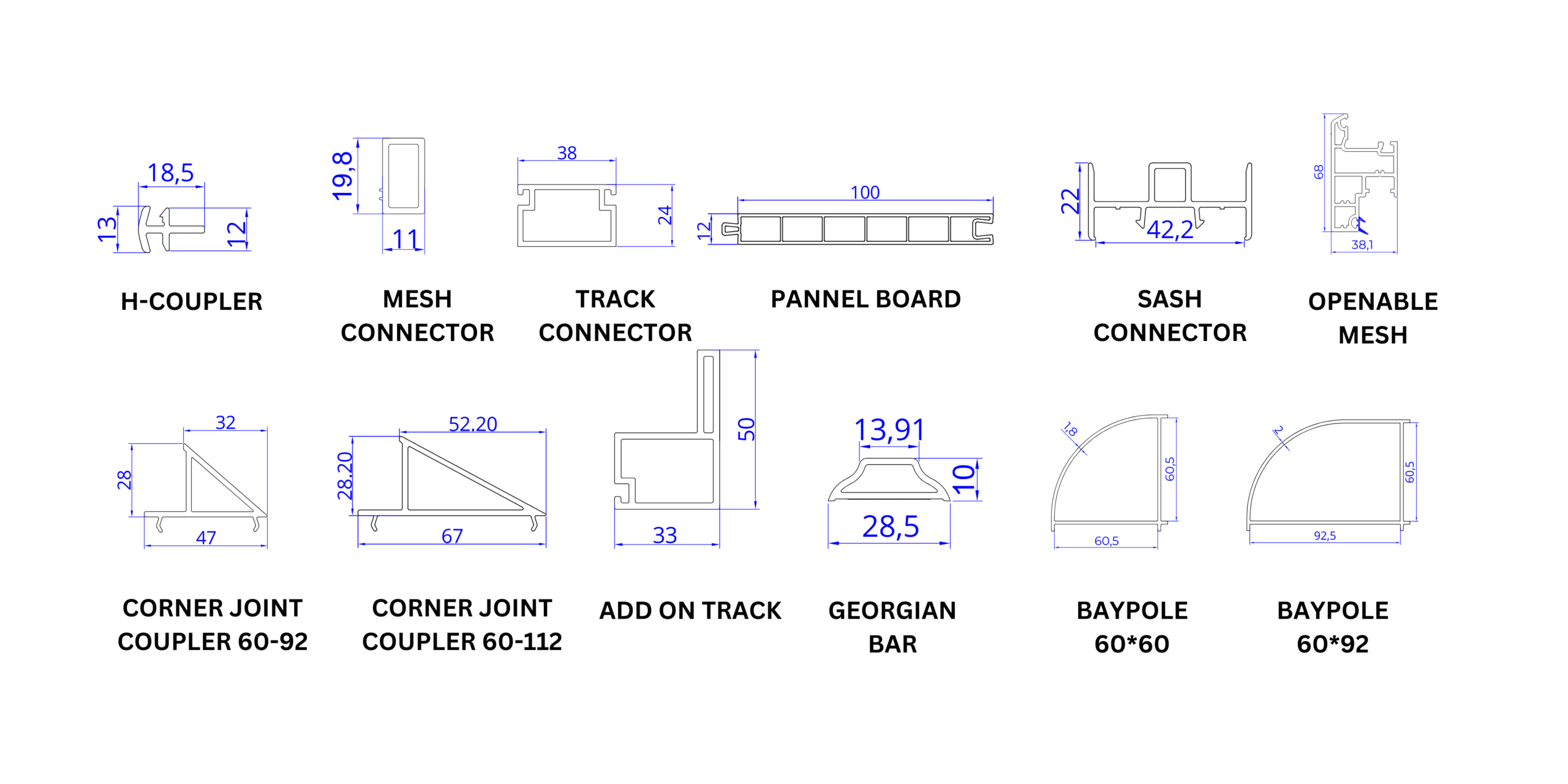
Check whether the required adaptors, connectors, mesh tracks and other auxiliary components are available within the same system.
UWDMA’s manufacturing guidance lists equipment such as double-head mitre saws, welding machines, corner-cleaning machines, glazing-bead saws, reinforcement screwdrivers and drainage-related equipment, demonstrating how closely profile selection is connected with the fabrication process.
How Are uPVC Windows Fabricated?
The profile is only the starting material. The finished window is created through a sequence of fabrication operations.
A typical workflow includes:
Profile measurement → Cutting → Reinforcement → Welding → Corner cleaning → Hardware preparation → Glazing → Assembly → Quality inspection
Cutting
Profiles are cut according to the required frame and sash dimensions.
Accurate cutting is essential because errors at this stage can affect corner joints and final dimensions.
Reinforcement
Where required by the system design, galvanized steel reinforcement is inserted into the designated profile cavity and secured according to the fabrication specification.
Welding
Suitable uPVC profiles can be mitre-cut and fusion welded to form the frame or sash assembly.
Corner Cleaning
After welding, excess material around the welded joints is removed to achieve a cleaner joint and proper fit.
Hardware Preparation
Lock holes, handle positions, drainage paths and other required machining operations are completed according to the system.
Glazing
The specified glass is positioned using the appropriate glazing components, gaskets and beads.
Final Assembly
Sashes, frames, hardware and other system components are assembled and checked for alignment and operation.
This fabrication sequence is why a fabricator-friendly profile system can make a significant difference to workshop efficiency.
What Is the Difference Between uPVC Profiles and uPVC Windows?
This is a common source of confusion.
uPVC profile refers to the extruded profile component used to manufacture a window or door.
uPVC window refers to the completed assembly containing the profiles along with glass, hardware, gaskets, reinforcement and other required components.
In simple terms:
Profile = component
Window = completed system
A profile manufacturer supplies the extrusion system. A fabricator uses those profiles to manufacture finished windows and doors according to project requirements.
This distinction is important when comparing suppliers because a profile manufacturer’s capabilities and a finished-window fabricator’s capabilities are not necessarily the same.
What Affects the Price of a uPVC Window?
There is no single universal price for a uPVC window.
Current Indian market guides show significant price variation depending on the profile, window type, glazing, hardware, reinforcement and installation.
The major factors include:
Profile System
Different profile configurations and quality levels affect material usage and system cost.
Window Type
Sliding, casement, fixed and other configurations require different profile and hardware combinations.
Glass
Single glazing, toughened glass, laminated glass and double-glazed units can produce significant differences in the final quotation.
Hardware
Handles, locks, hinges, rollers and multipoint systems contribute to the finished-window cost.
Reinforcement
Larger or structurally demanding openings may require different reinforcement specifications.
Fabrication
Cutting, welding, machining, glazing and assembly contribute to the finished product.
Installation
Site conditions, fixing requirements, sealants and civil work can also affect the final price.
Therefore, two quotations for the same window size may not represent the same product specification.
A better comparison is to ask for an itemized specification covering profile series, profile dimensions, reinforcement, glass, hardware, mesh, fabrication and installation.
How Do You Choose the Right uPVC Profile?
The correct profile should be selected according to the application, not simply by choosing the cheapest or thickest-looking section.
Start with these questions:
- Is the application a casement, sliding, fixed or door system?
- What are the opening dimensions?
- What glass specification will be used?
- Is steel reinforcement required?
- What hardware will be installed?
- What fabrication machinery is available?
- Is mosquito mesh required?
- Are auxiliary profiles required?
- What are the project cost requirements?
- Does the manufacturer provide the complete compatible profile system?
For larger openings or demanding applications, structural and wind-load considerations become particularly important. Government specifications specifically refer to profile series and reinforcement selection based on window/door size and wind-load considerations.
Common Mistakes When Buying uPVC Profiles
Choosing Only by Price
The lowest profile price does not necessarily produce the lowest overall project cost. Difficult fabrication, incompatible components or unsuitable reinforcement can create additional costs later.
Comparing Only the Number of Chambers
More chambers do not automatically mean a better system. The complete profile design and specification matter.
Ignoring Reinforcement
Large openings require proper consideration of reinforcement and structural requirements.
Selecting Glass Separately
The profile, glazing bead, gasket and glass specification need to work together.
Ignoring Hardware Compatibility
A good profile system still needs compatible hardware for proper operation.
Not Checking Auxiliary Components
Connectors, adaptors, mesh tracks and other auxiliary sections can become important during actual fabrication.
Comparing Finished Windows Without Comparing Specifications
A quotation should be compared based on the complete system rather than the phrase “uPVC window.”
uPVC Profiles: What Fabricators Should Remember
For a fabricator, the best profile is not simply the one with the most features on paper.
It should be a profile system that works efficiently with the workshop process.
A practical system should provide:
- Consistent dimensions
- Suitable profile configurations
- Reinforcement compatibility
- Efficient cutting and welding
- Glazing compatibility
- Hardware compatibility
- Auxiliary components
- Practical fabrication support
- Consistent product availability
- A reasonable balance between performance and project cost
This approach helps fabricators focus on what actually happens between profile extrusion and finished window installation.
Frequently Asked Questions
Are uPVC profiles and uPVC windows the same?
No. uPVC profiles are the extruded components used to manufacture the window or door. A finished uPVC window combines profiles with glass, reinforcement, gaskets, hardware and other components.
Which is better: casement or sliding uPVC profiles?
Neither is universally better. Casement and sliding systems serve different opening requirements. The right choice depends on ventilation, opening size, available space, hardware, glass and project requirements.
Is steel reinforcement necessary in every uPVC window?
Not necessarily in exactly the same form or specification. Reinforcement requirements depend on profile design, opening dimensions, wind load, glass weight and structural requirements. The manufacturer’s system specification should be followed.
Does more chambers always mean better uPVC profiles?
No. Chamber count is only one part of profile construction. Wall thickness, geometry, material formulation, reinforcement provision, glazing compatibility and the complete system should also be considered.
What should a fabricator check before buying uPVC profiles?
Check profile dimensions, reinforcement provision, welding compatibility, glazing bead and gasket compatibility, hardware integration, auxiliary profiles, drainage design and availability of fabrication support.
Why can two uPVC window quotations have very different prices?
Because the quotations may use different profile systems, glass, hardware, reinforcement, fabrication specifications and installation methods. Always compare the complete specification rather than only the price per square foot.
Are uPVC profiles suitable for doors as well as windows?
Yes. Different profile configurations can be designed for window and door applications. Door systems generally require appropriate profile sections, reinforcement, hardware and structural consideration based on the opening.
Can uPVC profiles be used for interior applications?
Selected uPVC profile systems and auxiliary profiles can be adapted for certain interior applications. The suitability depends on the intended use, required dimensions, design and system configuration.
Final Takeaway
Choosing a uPVC window starts before the glass and hardware are installed. The profile system determines the foundation on which the finished window or door is fabricated.
A practical evaluation should therefore look beyond appearance and price. Profile construction, reinforcement, fabrication compatibility, glazing, hardware, auxiliary components and project requirements all need to be considered together.
For fabricators, this system-level approach makes it easier to select profiles that fit the workshop process and the final application. For builders, dealers and project buyers, it provides a clearer way to compare quotations and understand what they are actually purchasing.
Smart uPVC Window Profiles are developed around this practical approach, providing profile systems for casement, sliding, eco and auxiliary applications with a focus on fabrication efficiency, system compatibility and everyday project requirements.